
Blog

How DTF Transfers Outperform White Toner Laser Transfers
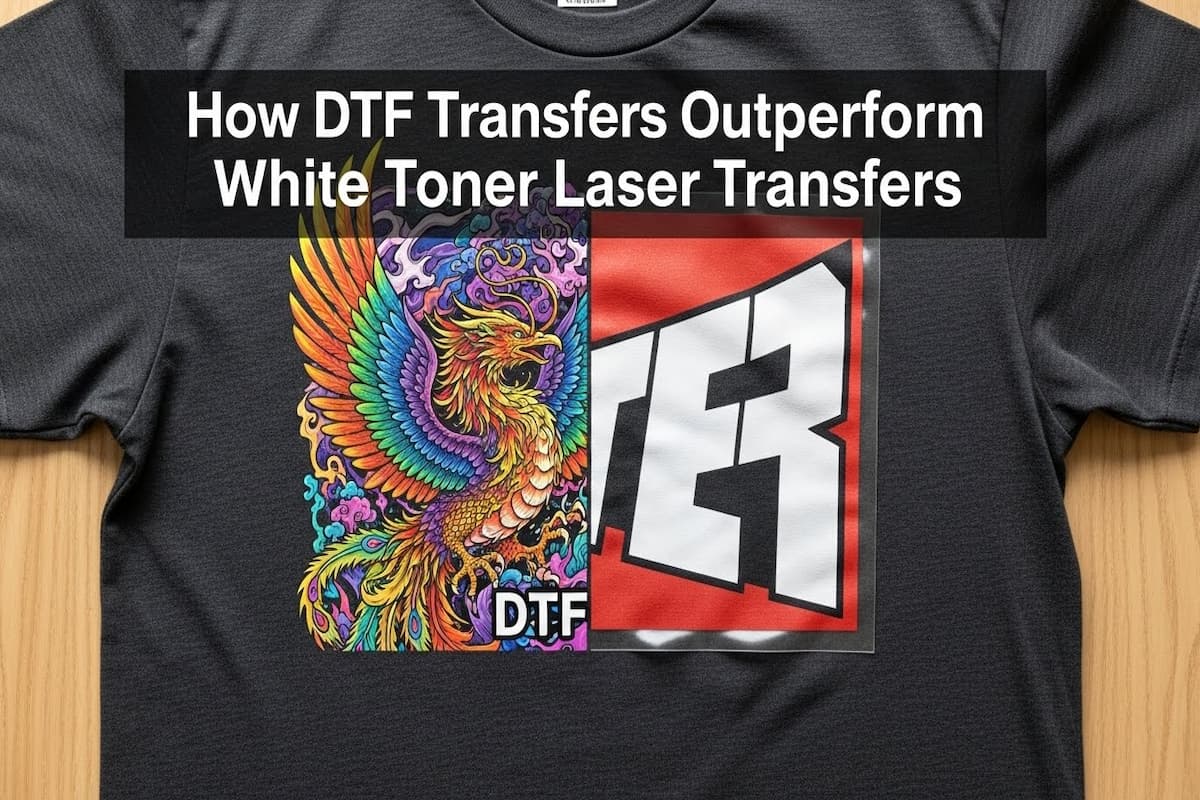
DTF transfers outperform white toner laser transfers in five critical areas: durability (50-100 washes vs 30-50 washes), hand-feel (soft and flexible vs thick and papery), fabric versatility (all fabrics vs primarily textiles), print size capacity (24" wide rolls vs maximum 13"x19" sheets), and production scalability (high-volume capable vs small-batch optimized). While white toner systems cost less upfront ($3,000-$15,000 vs $3,000-$50,000 for DTF), DTF delivers superior long-term value for apparel-focused businesses through better washability, stretch resistance, and production efficiency.
Table of Contents
ToggleKey Takeaways: DTF's Five Critical Advantages
For apparel-focused businesses, DTF transfers outperform white toner laser transfers in the metrics that drive customer satisfaction and operational efficiency:
- Durability: 50-100 washes vs 30-50 washes (67-100% improvement)
- Hand-Feel: Soft and flexible vs thick and papery (superior comfort)
- Fabric Versatility: All fabrics vs textile-focused (eliminates order declining)
- Print Size: 24-inch width vs 13-19 inch maximum (enables larger designs)
- Production Scalability: Roll-fed gang sheets vs sheet-fed individual handling (efficiency at volume)
White toner maintains advantages in three specific areas:
- Upfront Cost: $5,000-$8,000 vs $15,000-$25,000 for comparable models (lower barrier to entry)
- Maintenance: Minimal vs daily requirements (suits intermittent production)
- Substrate Range: Rigid materials (wood, metal, ceramics) vs fabric-focused (promotional product capability)
Bottom Line: Apparel businesses prioritizing durability, comfort, and scalability should invest in DTF. Promotional product companies needing rigid substrate capability and lower maintenance should choose white toner.
DTF Printing Process
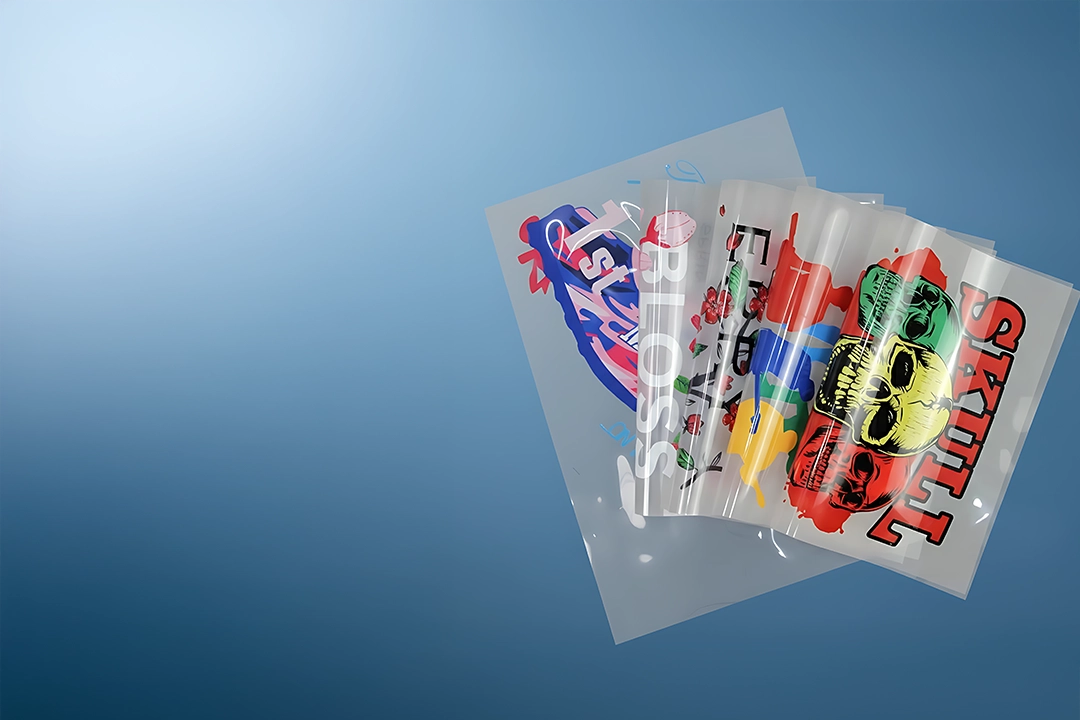
DTF printing uses water-based CMYK+White inks printed onto PET film, coated with thermoplastic polyurethane (TPU) adhesive powder, and cured before heat-press application at 300-320°F (148.889-160°C) for 15 seconds. The process creates transfers that bond mechanically with fabric fibers.
White Toner Laser Process
White toner printing uses laser printers with CMYK toner cartridges plus white toner (CMYW configuration, or CMYKW in five-color systems). Designs are printed on specialized transfer paper, laminated with adhesive sheets under heat and pressure, and then transferred to garments using a heat press.
1. Durability Comparison: Wash Cycle Performance
Winner: DTF---> 67-100% longer lifespan (50-100 vs 30-50 washes).
- DTF Transfer Longevity: DTF prints withstand 50-100+ wash cycles when properly applied and cared for. Independent testing shows black DTF prints remain fresh after 52 wash cycles without fading. Proper curing during production and cold-water washing extends durability to the upper range.
- White Toner Transfer Longevity: White toner transfers last 30-50 wash cycles before visible cracking appears. The rigid toner-based print layer is less flexible than DTF's textile ink formulation, resulting in earlier degradation on garments subjected to stretching and repeated washing.
2. Hand-Feel and Comfort
Winner: DTF --->Superior comfort and flexibility.
- DTF Hand-Feel Characteristics: DTF transfers produce a soft, flexible finish that stretches with fabric movement. The textile-based ink formulation creates thin transfer layers (approximately 0.75mm, including film) that maintain garment comfort, including for athletic wear and fitted clothing.
- White Toner Hand-Feel Issues: White toner prints create a thicker, "papery" feel on garments. Laser toner particles fused to transfer paper create a more rigid layer that customers notice during wear, particularly on dark garments, where heavier white toner base coats are required.
3. Fabric and Material Compatibility
Winner: Context-Dependent
- DTF for apparel-focused businesses (better fabric performance)
- White Toner for promotional product businesses (rigid substrate capability)
- DTF Versatility: DTF transfers work on all fabric types: 100% cotton, 100% polyester, cotton-poly blends, nylon, spandex, leather, and technical performance fabrics. The TPU adhesive bonds mechanically rather than chemically, enabling universal compatibility without pre-treatment.
Material Range:
- Cotton (all weights)
- Polyester (all types)
- Blends (any ratio)
- Nylon
- Spandex/elastane
- Leather
- Technical performance fabrics
- White Toner Material Range: White toner transfers work primarily on textiles but also extends to rigid substrates, including wood, metal, ceramics, glass, banners, window clings, labels, and magnets. This broader substrate compatibility makes white toner suitable for promotional products beyond apparel.
4. Print Size and Production Capacity
Winner: DTF ---> 24-inch (60.96 cm) width vs maximum 13-19 inches (33.02x48.26 cm)
- DTF Print Size Capabilities: DTF printers accommodate roll-fed film up to 24 inches (60.96 cm) wide with unlimited length. This enables large-format designs, oversized graphics, and efficient gang sheet production, allowing dozens of designs to print continuously without sheet-fed limitations.
Production Advantages:
- Roll printing: Continuous operation
- Maximum width: 24 inches (60.96 cm) standard
- Gang sheets: Multiple designs per run
- Length: Unlimited (roll-fed)
- White Toner Print Size Limits: White toner laser printers typically support sheet sizes of 11.7"x19" to 13"x19" (30.4038x48.26 to 33.02x48.26 cm), depending on model. Sheet-fed operation requires individual handling for each transfer, reducing production efficiency compared to DTF's roll-fed workflow.
Size Constraints:
- OKI 711WT: 8.5"x11 (21.59x27.94 cm)
- OKI Pro8432WT: 11"x17" (27.94x43.18 cm)
- OKI Pro9541: 13"x19" (33.02x48.26 cm)
- Crio: 11.7"x19" (29.718x48.26 cm)
5. Equipment Cost Analysis
Winner: White Toner ---> Lower upfront investment for small businesses.
- DTF System Investment: DTF equipment ranges from $3,000 for entry-level manual systems to $50,000 for automated industrial setups.
Price Breakdown:
- Manual DTF: $3,000-$5,000
- Mid-range automated: $10,000-$25,000
- Industrial systems: $25,000-$50,000+
- Typical monthly financing: $550 for $25,000 system
- White Toner System Investment: White toner printers range from $3,000 to $15,000, depending on print size and color configuration.
Price Breakdown:
- Entry models (8.5"x11"): $5,000 with startup supplies
- Mid-format (11"x17"): $8,000
- Large format (13"x19"): $12,000-$15,000
- Typical monthly financing: $250-$300
6. Production Speed and Workflow
Winner: Context-Dependent
- White Toner faster for small orders (1-10 pieces)
- DTF faster for medium-large orders (20+ pieces via gang sheets)
- DTF Production Workflow: DTF requires three steps: print design on film, apply adhesive powder (automated or manual), and cure transfer. Total time per 11"x17" design: approximately 2-3 minutes, including curing. Roll-fed systems batch multiple designs efficiently.
Workflow Efficiency:
- Print speed: Varies by model (slower per individual transfer)
- Gang sheet advantage: Batch dozens of designs in a single run
- Curing time: 2-3 minutes per design [ColDesi, 2024]
- Application time: 15 seconds, heat press
- White Toner Production Workflow: White toner requires three steps: print transfer, heat-press transfer onto an adhesive sheet, and press onto the garment. Total time per transfer: approximately 3 minutes (15 seconds print + 75 seconds marry + 45 seconds press + positioning time).
Workflow Timing:
- Print speed: 8-45 prints per minute, depending on model
- Crio: 16 prints/minute on 11"x17" paper
- iColor 560: 8-26 prints/minute
- iColor 650: 45 prints/minute
- Marry process: 75 seconds
- Heat press application: 45 seconds
7. Maintenance Requirements
Winner: White Toner ---> Significantly lower maintenance burden.
- DTF Maintenance Requirements: DTF printers require regular maintenance, including print-head cleaning, nozzle checks, and system flushes. Printers cannot remain idle for extended periods without regular maintenance to prevent ink system clogs.
Maintenance Schedule:
- Daily: Nozzle checks, test prints
- Weekly: Print head cleaning cycles
- Monthly: Deep cleaning, system maintenance
- Idle periods: Regular maintenance prints required
- White Toner Maintenance: White toner laser printers need minimal maintenance beyond toner replacement and occasional cleaning. Printers can remain unused for extended periods without degrading, providing a practical advantage for intermittent production schedules.
Maintenance Needs:
- Toner replacement as needed
- Periodic cleaning to prevent toner buildup
- No daily maintenance requirements
- Can sit idle without issues
8. Cost Per Transfer Comparison
Winner: DTF ---> Lower consumable costs at volume
- DTF Per-Transfer Economics: DTF consumable costs (ink, film, powder) typically range from $0.50 to $1.50 per transfer, depending on design size and coverage. High-volume production reduces per-piece costs through efficient material usage on gang sheets.
- White Toner Per-Transfer Economics: White toner consumables (toner cartridges, transfer paper, adhesive sheets) cost varies by design complexity. Starter toner cartridges yield approximately 800-1,200 prints. The two-step paper requirement (A-sheet and B-sheet/marry sheet) increases consumable costs compared to the single-film DTF process.
Which Technology Wins for Your Business?
Choose DTF When:
✓ Apparel production is your primary focus: DTF's superior durability (50-100 washes) and soft hand-feel deliver better customer satisfaction on garments.
✓ You process 50+ orders weekly: Gang sheet efficiency and roll-fed production make DTF faster for medium-to-high volume.
✓ Design complexity matters: Photorealistic images, gradients, and unlimited colors work better on DTF.
✓ Fabric variety is required: Universal compatibility across cotton, polyester, blends, and technical fabrics eliminates order decline.
✓ You can commit to maintenance: Daily maintenance routines are manageable within your workflow.
Choose White Toner When:
✓ Promotional products diversification: Ability to print on wood, metal, ceramics, and glass expands product line beyond apparel.
✓ Low-volume production: 1-20 pieces daily suits white toner's sheet-fed efficiency.
✓ Intermittent production schedule: Printer can sit idle without daily maintenance requirements.
✓ Budget constraints are the primary concern: Lower equipment investment ($5,000-$8,000 vs $15,000-$25,000 for comparable production capacity).
✓ Print size under 13"x19" is sufficient: Sheet limitations don't restrict your typical design requirements.
FAQs: DTF vs White Toner Laser Transfers
What's the equipment cost difference between DTF and white toner printers?
DTF equipment ranges from $3,000-$50,000 [Heat Transfer Warehouse, 2024; ColDesi, 2024], while white toner printers cost $3,000-$15,000 [Coastal Business, 2024; DigitalHeat FX, 2022]. Entry-level manual DTF systems start at $3,000-$5,000, comparable to small-format white toner printers at $5,000. However, automated DTF systems capable of high-volume production ($15,000-$25,000) deliver better long-term value for apparel businesses through superior durability and production efficiency, despite higher upfront cost.
What's the cost per transfer for DTF vs white toner?
DTF consumables (ink, film, powder) typically cost $0.50- $1.50 per transfer, depending on the size. White toner consumables (toner cartridges, transfer paper, adhesive sheets) vary by design complexity, with starter cartridges yielding approximately 800-1,200 prints. However, white toner's two-step paper requirement (A-sheet and B-sheet/marry sheet) increases consumable costs compared to DTF's single-film process. At high volume, DTF delivers lower per-piece costs through efficient use of gang sheet material.
Which feels better on clothing: DTF or white toner transfers?
DTF transfers produce a soft, flexible finish that stretches with fabric, while white toner creates a thicker, "papery" feel on garments. Customer feedback consistently favors DTF for wearable comfort, particularly for athletic wear and fitted clothing, where flexibility is important. The textile-based DTF ink forms thin transfer layers (0.75 mm), compared with white toner's rigid fused toner particles that customers notice during wear.
Which technology requires more maintenance?
White toner laser printers require significantly less maintenance than DTF printers. DTF systems require daily maintenance, including print-head cleaning, nozzle checks, and regular system flushes to prevent ink clogs. Printers cannot remain idle for extended periods without maintenance. In contrast, white toner printers require only periodic toner replacement and occasional cleaning to prevent toner buildup and can sit unused for extended periods without degrading, offering a practical advantage for intermittent production schedules.
Which is faster for production: DTF or white toner?
Context-dependent. White toner printers produce 8-45 individual prints per minute, making them faster for small orders (1-10 pieces). However, DTF's gang sheet capability batches dozens of designs into a single production run, making it faster for medium-to-large orders (20+ pieces). A DTF 11"x17" design requires approximately 2-3 minutes, including curing, while white toner requires approximately 3 minutes total (15 seconds print + 75 seconds marry + 45 seconds press). For 50-piece orders with varied designs, DTF gang sheets significantly outperform sheet-fed white toner handling.
Which technology is better for a startup apparel business?
DTF for most startups, despite the higher upfront cost. Here's why: (1) Superior durability (50-100 washes) reduces customer complaints and returns; (2) Soft hand-feel improves product reviews and repeat orders; (3) Universal fabric compatibility eliminates order declining; (4) Scalability accommodates growth from 50 to 500+ weekly orders without equipment replacement; (5) Gang sheet efficiency handles design variety profitably. However, startups with budgets under $10,000 or intermittent production schedules should start with a lower-investment white toner option ($5,000-$8,000) with minimal maintenance requirements until volume justifies a DTF upgrade.
How long do DTF transfers last compared to white toner transfers?
DTF transfers last 50-100 wash cycles when properly applied and cared for, while white toner transfers typically last 30-50 wash cycles before cracking appears. DTF's textile-based ink formulation provides 67-100% longer durability than white toner's rigid laser toner particles. Independent testing showed DTF prints remaining fresh after 52 washes with no fading, while white toner manufacturers recommend cold-water washing only to extend lifespan.
How do I test DTF quality before buying equipment?
Order sample transfers from professional DTF suppliers, such as DAB DTF Transfer in Richardson, Texas. Press samples with your heat press (standard settings: 300-320°F for 15 seconds), wash the test multiple times (10-20 cycles), evaluate hand feel, durability, and color vibrancy, then compare directly against white toner samples on identical garments. This real-world testing reveals actual performance differences that marketing materials cannot convey. Testing costs under $50-$100 but prevents $5,000-$15,000 equipment misallocation.
Do DTF transfers work on all fabric types?
Yes. DTF transfers work on all fabric types, including 100% cotton, 100% polyester, cotton-poly blends, nylon, spandex, leather, and technical performance fabrics. The TPU adhesive bonds mechanically rather than chemically at 300-320°F (148.889-160°C) for 15 seconds, enabling universal compatibility without pre-treatment or parameter adjustments. White toner transfers work primarily on textiles, but can print on rigid substrates (wood, metal, ceramics, glass) that DTF cannot accommodate.
Can white toner transfers print larger designs than DTF?
No. DTF printers accommodate roll-fed film up to 24 inches wide with unlimited length, while white toner laser printers max out at 11.7" x 19" to 13" x 19" sheet sizes. DTF's roll-fed capability enables oversized graphics, all-over prints, and efficient gang sheet production that is impossible with sheet-fed white toner systems. This size advantage makes DTF superior for fashion apparel, athletic uniforms, and designs requiring large-format printing.
Can white toner print on rigid surfaces like wood and metal?
Yes. White toner transfer work is available on wood, metal, ceramics, glass, banners, window clings, labels, and magnets, capabilities DTF cannot match. This substrate versatility makes white toner suitable for promotional products businesses needing to decorate items beyond apparel. However, for businesses focused primarily on garment decoration, DTF's superior durability (50-100 vs 30-50 washes), hand feel, and fabric compatibility outweigh white toner's advantage on rigid substrates.
Which Transfer Method is Right for You?
When comparing DTF and white toner laser transfers, the choice depends on your business model, product focus, and growth plans. DTF stands out for superior wash durability, fabric compatibility, and a softer, more professional finish, making it ideal for apparel-focused businesses seeking long-term customer satisfaction and scalability.
White toner systems offer advantages in printing rigid materials, lower maintenance, and a lower upfront investment, which can benefit startups or promotional product companies with smaller, varied output.
Ultimately, businesses prioritizing garment quality and production efficiency should lean toward DTF, while those needing versatility across substrates or working with limited budgets may find white toner more suitable. Evaluate your production goals and test samples, and choose the system that best aligns with your workflow and customer expectations.