
Blog

How Much Does DTF Printing Cost?
Digital printing technologies have opened up new opportunities for small apparel brands and hobbyists to create professional-quality designs on demand. Among these methods, Direct‑to‑Film (DTF) printing stands out because it combines bright, full‑color prints with the versatility to work on cotton, polyester, blends, and even non-fabric items.
Table of Contents
ToggleDTF printing costs range from $2-$5 per transfer for pre-printed options to $1.80-$4.25 per print for in-house production. Initial investments vary dramatically: heat press setups require $800-$1,000, while professional DTF operations need $25,000-$50,000+ for complete equipment packages.
Hidden costs add 25-35% to basic expenses, including weekly maintenance ($50-$200), monthly utilities increases ($100-$300), and initial waste factors (20-25%). Break-even timelines range from 2-3 months for transfer methods to 12-18 months for professional equipment.
DTF becomes more economical than screen printing for orders under 48 pieces and outperforms DTG on non-cotton fabrics. Entry-level businesses should start with pre-printed transfers, scale to gang sheets, then consider in-house production once monthly volumes exceed 200-300 prints.
Professional setups achieve 65-85% gross margins, while transfer methods maintain 45-65% margins. Success depends on matching investment level to current volume and growth trajectory rather than choosing the lowest upfront cost.
DTF Printing Actually Costs in 2025
| Method | Setup Cost | Per Print Cost | Best For |
| Pre-printed transfers | $300-$1,000 (heat press) | $2-$5 each | Testing markets, small orders |
| Gang sheets | $300-$1,000 (heat press) | $0.50-$3 per design | Medium volume, variety |
| Full-service production | $0 upfront | $5-$23 per shirt | Turnkey solutions |
| In-house setup | $5,000-$50,000+ | $1.65-$3.85 per print | High volume, maximum control |
The true cost per print ranges from $0.50 for high-volume gang sheets to $23+ for premium full-service small runs. Regional variations exist; DFW area pricing tends to be 10-15% lower than coastal markets due to lower overhead costs.
Monthly operational costs vary significantly:
- Small operations: $200-$800/month
- Medium shops: $1,500-$4,000/month
- Commercial facilities: $5,000-$15,000/month
These numbers include materials, utilities, maintenance, and labor, the complete picture that most cost guides skip.
Method 1: Buying Pre-Made DTF Transfers
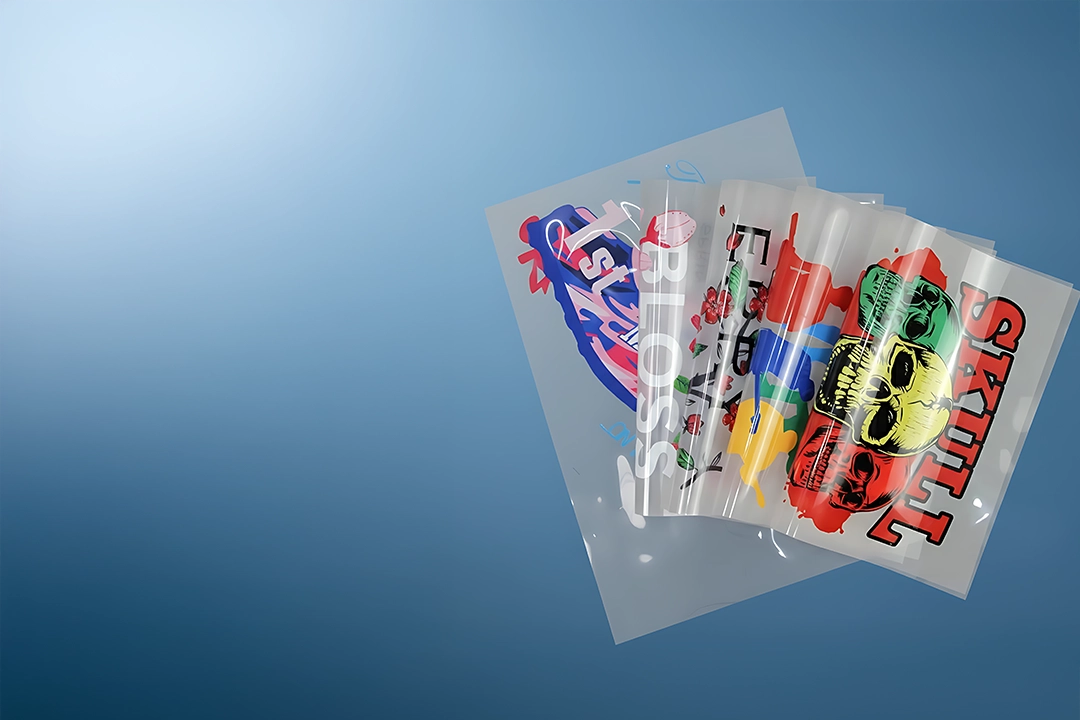
Pre-printed DTF transfers offer the lowest barrier to entry for businesses not ready to invest in printing equipment. Local suppliers like DAB DTF in Richardson provide same-day pickup for orders placed by noon, reducing shipping costs and turnaround times.
Current DTF Transfer Market Pricing
Single transfer costs by size:
- Small transfers (3"×3"): $2-$4 each for orders under 50 pieces
- Medium transfers (5"×5"): $4-$7 each for standard designs
- Large transfers (10"×12"): $8-$12 each for full front prints
Cost breakdown for complete shirt production:
- Blank Next Level 3600 shirt: $4-$5.50, depending on quantity
- DTF transfer: $2-$12 based on size and complexity
- Heat press time: $0.50-$1.50 in labor costs
- Total per shirt: $6.50-$19
Pros and Cons of Buying Pre-Made DTF Transfers
Advantages:
- Minimal upfront investment (just a heat press required)
- Test market response without large commitments
- Store transfers indefinitely without degradation
- Print multiple locations with minimal cost increase
- No technical expertise required
Disadvantages:
- Higher per-unit costs than in-house production
- Limited customization once printed
- Shipping delays for online orders
- Heat press equipment is still required ($300-$1,000)
Best Applications of Buying Pre-Made DTF Transfers
Pre-printed transfers work excellently for kitchen and bath remodeling businesses, adding branded merchandise. Custom aprons, work shirts, and promotional items require minimal investment while building brand recognition.
Method 2: DTF Gang Sheets - Maximum Value Strategy
Gang sheets revolutionize DTF economics by combining multiple designs on a single sheet, dramatically reducing per-design costs. This method bridges the gap between single transfers and full in-house production.
Standard Sheet Sizes and Costs
- 22" × 24" sheet: $35-$40 (fits 20-30 small designs or 4-6 large designs)
- Cost per small design: $1.15-$2.00
- Cost per large design: $6.65-$10.00
- 22" × 120" sheet: $90-$110 (accommodates 100+ small designs or 15-20 large designs)
- Cost per small design: $0.90-$1.10
- Cost per large design: $4.50-$7.35
- Large format sheets: $150+ (300+ small designs or 40+ large designs)
- Cost per small design: $0.50-$0.75
- Cost per large design: $3.75-$4.50
Gang Sheet Optimization Strategies
DAB DTF Transfer's Space Efficiency Tips:
- Use gang sheet builder tools (most print shops offer free online tools)
- Nest complementary designs to minimize waste
- Mix sizes strategically, combine small logos with large graphics
- Plan orders around sheet dimensions to maximize usage
Real savings example:
- Individual 4"×4" transfers: $4 each × 50 = $200
- Same designs on gang sheets: $0.75 each × 50 = $37.50
- Savings: $162.50 (81% reduction)
Additional Considerations for DTF Gang Sheet
Time investment:
- Cutting individual transfers: 2-3 minutes per design
- Sorting and organizing: Additional 30-60 minutes per sheet
- Storage requirements: Climate-controlled space recommended
Quality factors:
- Professional cutting tools improve efficiency ($50-$150 investment)
- Proper storage prevents film degradation
- A clear labeling system is essential for inventory management
Method 3: Full-Service DTF Production
Full-service DTF production eliminates all equipment and operational complexities by outsourcing the entire process. This approach suits businesses focused on design and marketing rather than production management.
Complete Service Pricing
Volume-based pricing structure:
- 10 shirts: $18-$23 per shirt (ideal for testing or exclusive releases)
- 50 shirts: $15-$18 per shirt (small business orders, events)
- 100 shirts: $12-$15 per shirt (regular production runs)
- 500+ shirts: $8-$12 per shirt (bulk commercial orders)
- 1000+ shirts: $6-$10 per shirt (maximum economies of scale)
Service inclusions:
- Design file preparation and color correction
- Premium blank apparel sourcing
- Professional DTF printing with quality control
- Heat pressing and finishing
- Packaging and shipping coordination
- Rush order capabilities (24-48 hours with premium)
Hidden Service Costs (Additional fees to consider):
- Setup charges: $25-$50 per design (first-time orders)
- Color matching: $15-$30 for specific Pantone requirements
- Rush processing: 50-100% surcharge for orders under 48 hours
- Design modifications: $25-$75 per revision
- Shipping: $8-$25 depending on order size and destination
Pros and Cons of Full-service DTF production
Advantages:
- Zero equipment investment or maintenance
- Professional quality control and consistency
- Scalability without operational complexity
- Focus resources on design and customer acquisition
- Access to premium equipment and techniques
Disadvantages:
- Higher per-unit costs, especially for small orders
- Less control over production timing and quality
- Potential for excess inventory with bulk minimums
- Dependency on external supplier reliability
- Limited flexibility for rush orders or modifications
Method 4: In-House DTF Printing Setup
Setting up in-house DTF printing requires significant initial investment but offers the lowest per-print costs and maximum operational control. This approach becomes profitable once monthly volumes exceed 200-300 prints.
Complete Equipment Investment Breakdown for In-House DTF Printing Setup
Entry-Level Setup ($5,000-$8,000)
Core equipment:
- A3 DTF Printer: $2,000-$3,500 (Epson XP600 or L1800 based)
- 15" Heat Press: $300-$600 (manual operation)
- Powder Shaker/Dryer: $800-$1,500 (entry-level automatic)
- Air Filter System: $300-$500 (basic ventilation)
- RIP Software: $200-$600 (color management)
- Initial Supplies: $500-$1,000 (inks, film, powder)
Production capacity: 20-50 prints per day
Mid-Range Setup ($10,000-$20,000)
Enhanced equipment:
- A3+ DTF Printer: $4,000-$7,000 (dual head XP600)
- Pneumatic Heat Press: $800-$1,500 (consistent pressure)
- Professional Powder System: $2,000-$3,500 (integrated shaker/dryer)
- Commercial Air Filter: $800-$1,200 (ducted system)
- Advanced RIP Software: $600-$1,200 (color profiling)
- Extended Supplies: $1,000-$2,000 (bulk purchasing)
Production capacity: 100-200 prints per day
Professional Setup ($25,000-$50,000+)
Industrial equipment:
- 60cm DTF Printer: $8,000-$15,000 (multiple I3200-A1 heads)
- Automatic Heat Press: $2,000-$4,000 (conveyor system)
- Industrial Powder Line: $5,000-$8,000 (continuous processing)
- Commercial Ventilation: $2,000-$5,000 (full exhaust system)
- Color Management Suite: $1,500-$3,000 (spectrophotometer included)
- Bulk Supply Inventory: $3,000-$5,000 (quarterly purchasing)
Production capacity: 500+ prints per day
Material Cost Analysis (Per 8"×10" Print)
Consumable breakdown:
- DTF Ink: $0.60-$1.00 (varies by color coverage and density)
- DTF Film: $0.40-$0.60 (A3 sheet, premium quality)
- DTF Powder: $0.15-$0.25 (adhesive application)
- Labor: $0.50-$2.00 (operator skill and efficiency)
- Utilities: $0.10-$0.25 (electricity for curing and equipment)
- Maintenance Reserve: $0.05-$0.15 (equipment upkeep fund)
Total material cost: $1.80-$4.25 per print
Hidden Operational Costs of In-House DTF Printing Setup
Most DTF cost guides ignore these essential expenses:
Weekly maintenance requirements:
- Print head cleaning: $15-$30 in materials and labor
- Calibration and testing: $10-$20 in materials
- General equipment maintenance: $25-$50
- Weekly total: $50-$100
Monthly operational expenses:
- Electricity increase: $100-$300 (curing ovens are energy-intensive)
- HVAC adjustment: $50-$150 (managing heat and fumes)
- Insurance addition: $75-$200 (equipment and liability coverage)
- Monthly total: $225-$650
Quarterly major expenses:
- Print head replacement: $200-$600 (wear item)
- Deep cleaning and calibration: $150-$300
- Software updates and licensing: $50-$200
- Quarterly total: $400-$1,100
Break-Even Analysis for In-House DTF Printing Setup
Entry-level setup example:
- Total investment: $6,500
- Cost per print: $2.25 (including all expenses)
- Selling price: $8.00 per print
- Profit per print: $5.75
- Break-even point: 1,131 prints (6-8 months at 200 prints/month)
Professional setup example:
- Total investment:$35,000
- Cost per print: $1.85 (economies of scale)
- Selling price: $6.00 per print (competitive pricing)
- Profit per print: $4.15
- Break-even point: 8,434 prints (12-15 months at 600 prints/month)
Quality Control and Waste Management
Initial learning curve costs:
- Material waste: 20-25% during the first 3 months
- Reprints due to errors: 10-15% initially
- Training and skill development: $500-$1,500 investment
- Additional cost: $0.50-$1.00 per print during the learning phase
Ongoing quality measures:
- Color calibration frequency: Weekly ($10-$20 per session)
- Test prints and adjustments: Daily ($5-$15)
- Quality control inspection: 5-10% of production time
DTF vs. Other Printing Methods: Complete Cost Comparison
| Method | Setup Cost | Per Print Cost | Fabric Compatibility | Durability | Minimum Order |
| DTF Printing | $5K-$50K | $1.85-$4.25 | All fabrics, hard goods | 50+ washes | 1 piece |
| DTG Printing | $10K-$30K | $3.00-$8.00 | Cotton only (95%+) | 30-40 washes | 1 piece |
| Screen Printing | $2K-$10K | $0.75-$3.00 | Most fabrics | 100+ washes | 50+ pieces |
| Heat Transfer Vinyl | $500-$2K | $2.00-$6.00 | Most fabrics | 25-35 washes | 1 piece |
| Sublimation | $3K-$8K | $1.50-$4.00 | Polyester only | 50+ washes | 1 piece |
When Each Method Wins on Cost
DTF advantages:
- No fabric pretreatment required (saves $0.50-$1.00 per shirt vs DTG)
- Works on dark fabrics without additional cost
- Lower ink consumption than DTG (30-40% less)
- Single-piece orders economically viable
Screen printing advantages:
- Lowest per-unit cost for orders over 100 identical pieces
- Exceptional durability justifies premium pricing
- Fastest production for large runs
DTG advantages:
- Softest hand feel on cotton garments
- Unlimited color complexity at same cost
- Excellent for photo-realistic designs
Cost Crossover Points
DTF becomes more economical than screen printing:
- Orders under 48 pieces (any design complexity)
- Multi-color designs under 100 pieces
- Mixed design orders regardless of quantity
DTF becomes more economical than DTG:
- Non-cotton fabrics (DTG requires costly pretreatment)
- Dark fabric printing (DTG requires underbase)
- Polyester and blended materials
Business Scenario Analysis
Scenario 1: Home-Based Side Business
Success factors:
- Focus on high-margin items (custom aprons at $35-$45 retail)
- Bundle with remodeling services for added value
- Seasonal promotions during peak remodeling months
Scenario 2: Small Print Shop Expansion
Growth strategy:
- Start with gang sheets to minimize waste
- Build a customer base before expanding to larger equipment
- Cross-sell to existing embroidery customers
Scenario 3: Commercial DTF Operation
Scaling considerations:
- Multiple printer setup for redundancy
- Dedicated staff for different production stages
- Wholesale pricing for high-volume customers
ROI Calculator and Break-Even Analysis
Simple ROI Formula for Each Method
Pre-printed transfers:
ROI = (Monthly Profit - Monthly Costs) / Initial Investment × 100
Example: ($2,200 - $800) / $800 × 100 = 175% monthly ROI
Break-even: 2-3 months typically
Gang sheets:
ROI = (Monthly Profit - Monthly Costs) / Initial Investment × 100
Example: ($3,500 - $1,200) / $800 × 100 = 287% monthly ROI
Break-even: 1-2 months typically
In-house setup:
ROI = (Monthly Profit - Monthly Costs) / Initial Investment × 100
Example: ($8,000 - $3,000) / $25,000 × 100 = 20% monthly ROI
Break-even: 12-15 months typically
Growth Scenario Planning
Conservative growth model:
- Month 1-3: 50% capacity utilization
- Month 4-6: 70% capacity utilization
- Month 7-12: 85% capacity utilization
- Year 2+: 95% capacity utilization
Aggressive growth model:
- Month 1-2: 70% capacity utilization
- Month 3-4: 90% capacity utilization
- Month 5+: 100%+ capacity (expansion required)
Profit Margin Expectations
Industry standard margins by method:
- Pre-printed transfers: 45-65% gross margin
- Gang sheets: 55-75% gross margin
- In-house production: 65-85% gross margin
- Full-service provision: 35-55% gross margin
Decision Framework: Which Method Fits Your Budget?
Budget Under $1,000
Recommendation: Start with pre-printed transfers
- Focus on high-margin, low-volume items
- Test market demand before larger investments
- Build customer base and cash flow
- Plan transition to gang sheets within 6-12 months
Budget $1,000-$5,000
Recommendation: Gang sheet strategy with quality heat press
- Maximum variety with minimal investment
- Excellent learning platform for DTF processes
- Strong profit margins support equipment upgrades
- Natural progression to in-house printing
Budget $5,000-$15,000
Recommendation: Entry-level in-house setup
- Complete control over production and quality
- Competitive per-print costs
- Scalability for business growth
- Professional service capability
Budget $15,000+
Recommendation: Professional in-house operation
- Commercial production capabilities
- Maximum profit margins
- Market leadership positioning
- Multiple revenue stream opportunities
FAQs About The Cost of DTF Transfer
What's the true cost per print for DTF including all expenses?
Complete costs range from $1.80-$4.25 per 8"×10" print, including materials, labor, utilities, and maintenance reserves. Entry-level operations typically see $2.50-$3.50 per print, while professional setups achieve $1.80-$2.50 per print.
How long does it take to break even on DTF equipment?
Break-even timelines vary by setup: pre-printed transfers (2-3 months), gang sheets (1-2 months), entry-level equipment (8-12 months), professional setup (12-18 months). The actual timeline depends on volume and pricing strategy.
What hidden costs should I budget for?
Plan for 25-35% additional costs beyond equipment: maintenance ($50-$200 weekly), utilities increase ($100-$300 monthly), insurance ($250-$900 monthly), and waste factor (15-25% initially). These often surprise new operators.
How much should I charge for DTF printed shirts?
Retail pricing typically ranges $15-$35 per shirt, depending on design complexity, blank quality, and market positioning. Wholesale pricing runs $8-$18 per shirt. Maintain 45-65% gross margins for sustainability.
Is DTF cheaper than screen printing for small orders?
Yes, DTF becomes more economical than screen printing for orders under 48 pieces of any complexity, or under 100 pieces for multi-color designs. Screen printing is ideal for orders of 200 or more identical pieces.
Can I finance DTF equipment?
Most equipment suppliers offer financing options: 0% for 6-12 months, 2.9-8.9% for 24-60 month terms. Factor financing costs into ROI calculations. Consider equipment leasing for professional setups to preserve working capital.
Conclusion
DTF printing costs vary dramatically based on your chosen approach and business goals. Pre-printed transfers offer the lowest barrier to entry at an initial investment of $800-$1,000, perfect for testing markets and building cash flow. Gang sheets provide the best value proposition for growing businesses, reducing per-print costs 60-80% compared to individual transfers. In-house setups require substantial investment ($5,000-$50,000+) but deliver the lowest operating costs and maximum control once volumes justify the equipment.
The key to DTF success lies in matching your approach to your current situation and growth trajectory. Start conservatively with pre-printed transfers, reinvest profits into gang sheet strategies, and scale to in-house production as volume and expertise develop. Remember that hidden costs, maintenance, utilities, insurance, and waste add 25-35% to the cost of basic equipment and materials.
For kitchen and bath remodeling businesses, DTF printing offers an excellent diversification opportunity. Custom aprons, work shirts, and promotional items complement core services while building brand recognition. The relatively low startup costs and high profit margins make DTF an attractive addition to existing operations.
Immediate action steps:
- Calculate your target volume based on the current customer base
- Choose your starting method using the budget framework above
- Source local suppliers for transfers or equipment in the DFW area
- Test with small orders before committing to larger investments
- Plan your scaling strategy for business growth
Whether you choose pre-printed transfers with their immediate profitability, gang sheets with their excellent value proposition, or invest in complete in-house capabilities for maximum control, DTF printing's flexibility and growing market demand make it a smart addition to service-based businesses looking to increase revenue and strengthen customer relationships.
The key is starting smart, scaling strategically, and understanding the real costs upfront. Your DTF business starts with the first transfer, but success comes from making informed decisions based on a complete understanding of costs.